Gros neighbourhood San Sebastian
We’ve said it before, we’ve almost certainly said it, and we’ve definitely thought it: Gros is one of our favourite neighbourhoods in San Sebastian, if not our absolute favourite. We love walking around it, coming here to eat or have a drink, enjoying La Zurriola beach. The atmosphere is mostly authentic, so yes. But let’s […]
Categories
We’ve said it before, we’ve almost certainly said it, and we’ve definitely thought it: Gros is one of our favourite neighbourhoods in San Sebastian, if not our absolute favourite. We love walking around it, coming here to eat or have a drink, enjoying La Zurriola beach. The atmosphere is mostly authentic, so yes. But let’s not get carried away by how much we like the neighbourhood. Let’s see why.
A bit of history
At first, Gros is nothing more than a huge sandy area bathed by the Urumea River and the Cantabrian Sea and surrounded by several hills and Mount Ulia. It is practically uninhabited except for a few houses and farmhouses on the slopes of Ulia, the only solid ground in the area. The sandy area is shaped by the water, which changes its form with each tide. A road from France crosses the Urumea to reach San Sebastian, a small town surrounded by walls at the foot of Mount Urgull.
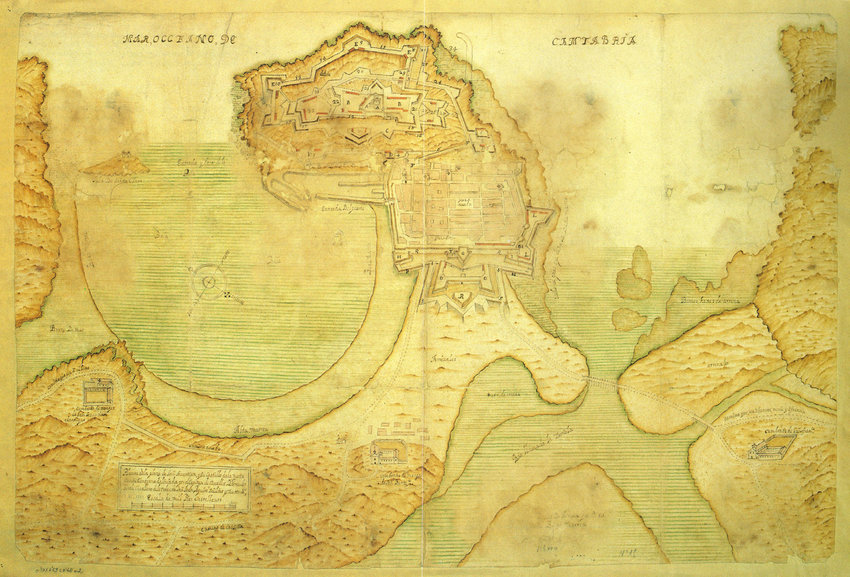
Fast forward to the 19th century, when buildings began to be constructed on this sandy area. Houses, warehouses, factories… The sandy area, which belonged almost entirely to Tomás Gros, hence the name of the neighbourhood, was included in the plans to expand Donosti, and an expansion was designed that included building the Santa Catalina bridge in stone, channelling the Urumea River and delimiting the sandy area to a beach for leisure. The seed of today’s Gros was sown here.
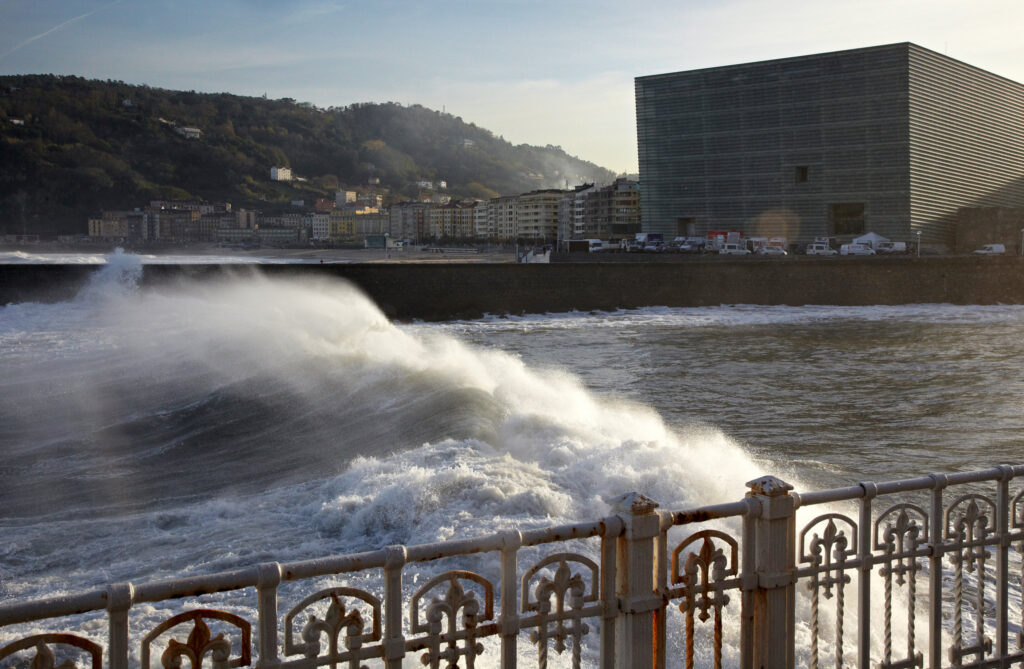
We end this journey in the 21st century, with La Zurriola beach secured by a breakwater, attracting surfers, the Kursaal being built, many streets becoming pedestrianised and the hospitality industry becoming so important that it has become a new place of pilgrimage for lovers of good food and drink. This is the Gros we know and love so much.
Reasons to visit Gros
Or we could also say, ‘reasons why we like Gros’. There are several, let’s take a look at them.
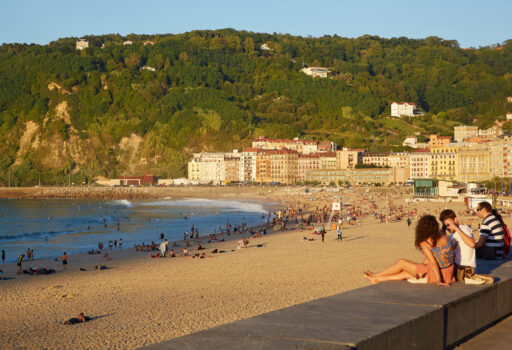
- La Zurriola beach: the surfing beach. There’s no time of year when you won’t see someone on a board trying to catch a wave. Its promenade is very pleasant and easy to walk along, and in the summer it has the best sunsets in the city (apart from La Concha). At the end of the beach, on ‘the Wall’, you’ll see young people enjoying the views and perhaps a drink and/or something to eat. We might be there, so come and say hello!

- Architecture: The Old Town and the centre of Donosti are quite monotonous, with all the buildings looking very similar. Gros, however, is eclectic, with historicist and rationalist buildings, ugly blocks built in the 1970s, the Kursaal… And they all blend together perfectly and harmoniously. Wandering around Gros is always a good idea.
- Shopping: Speaking of wandering around, Gros still has some traditional shops, but new ones have also opened that have adapted wonderfully to the atmosphere and rhythm of the neighbourhood. With the pedestrianised streets, it is very easy to access them and be one of the locals doing their shopping.
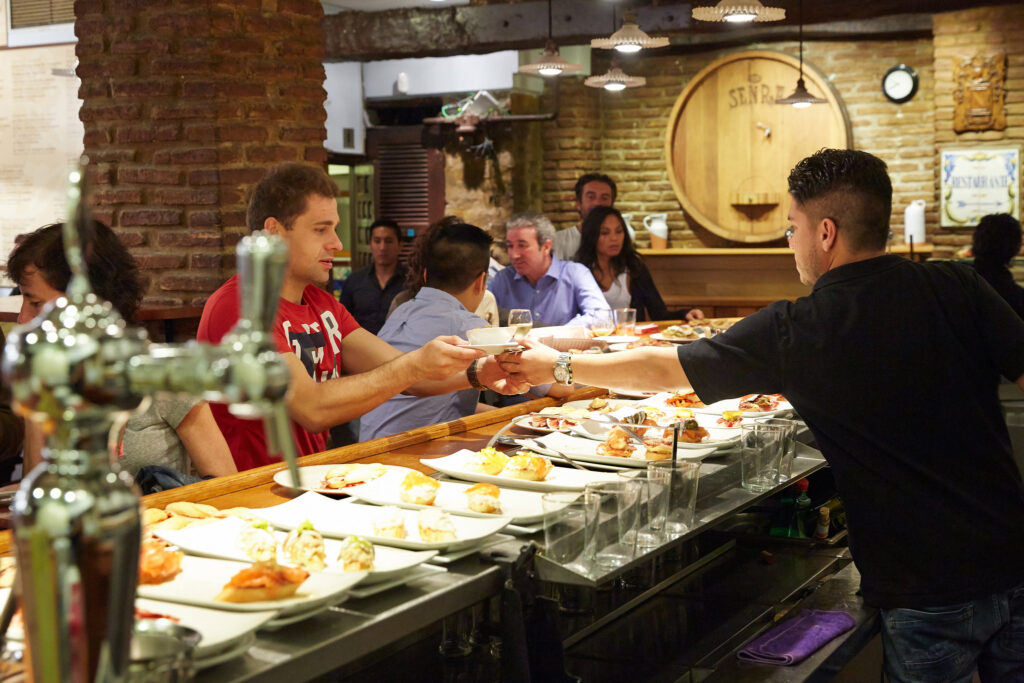
- Gastronomy: This couldn’t be left out, of course. New options have joined the traditional bars, many of them serving international cuisine, so if you’re tired of pintxos (of which you can find very good ones in the neighbourhood), here you can try traditional food, but also Peruvian, Vietnamese, Korean, Senegalese, Japanese, Mexican and Ethiopian, among others. There are also several vegan/vegetarian restaurants, which means there is much more variety than in other parts of San Sebastian.
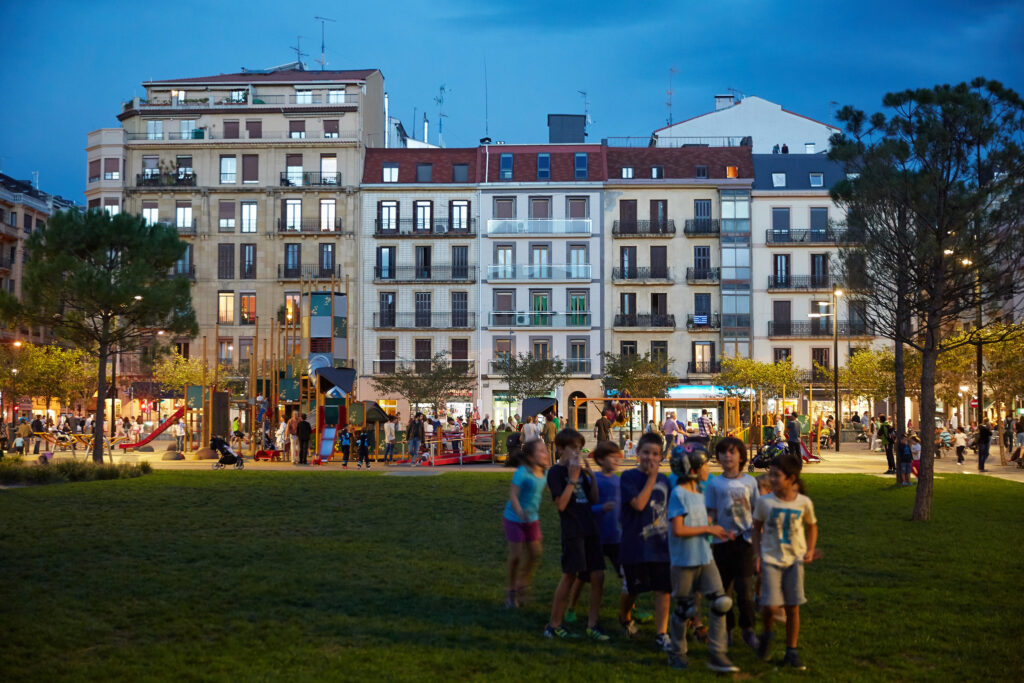
- The people: A neighbourhood is nothing without its residents, and in Gros we have both long-time residents and newcomers. There are families, students, immigrants and Basques, old and young, all mixed together perfectly. There are also tourists, of course, but they are all concentrated in a couple of streets near the Kursaal; everything else belongs to the “groseros” (“rudes”, yes, that’s what they’re called). So Gros is perfect for getting away from the hustle and bustle of the Old Town and discovering what Donosti is really like without going too far.

Hello! My name is Hegoi, a name that has its roots in Basque mythology, and since I was a child I have been fascinated by Basque culture and above all by talking about it with anyone who wants to know about it, so when I could, I studied tourism and nowadays I work as a guide at Bike Rental San Sebastian.