Santa Clara Island Lighthouse: history, how to get there and what to see
Santa Clara Island, and, more specifically, its lighthouse, holds many secrets. From its construction, through its time as the home of the well-known lighthouse keeper Andoin, right up to the present day with Cristina Iglesias’s sculpture inside. In this post, we’re going to reveal everything you didn’t know about this spot in Donostia-San Sebastián. History […]
Categories
Santa Clara Island, and, more specifically, its lighthouse, holds many secrets. From its construction, through its time as the home of the well-known lighthouse keeper Andoin, right up to the present day with Cristina Iglesias’s sculpture inside. In this post, we’re going to reveal everything you didn’t know about this spot in Donostia-San Sebastián.
History of the lighthouse and the island
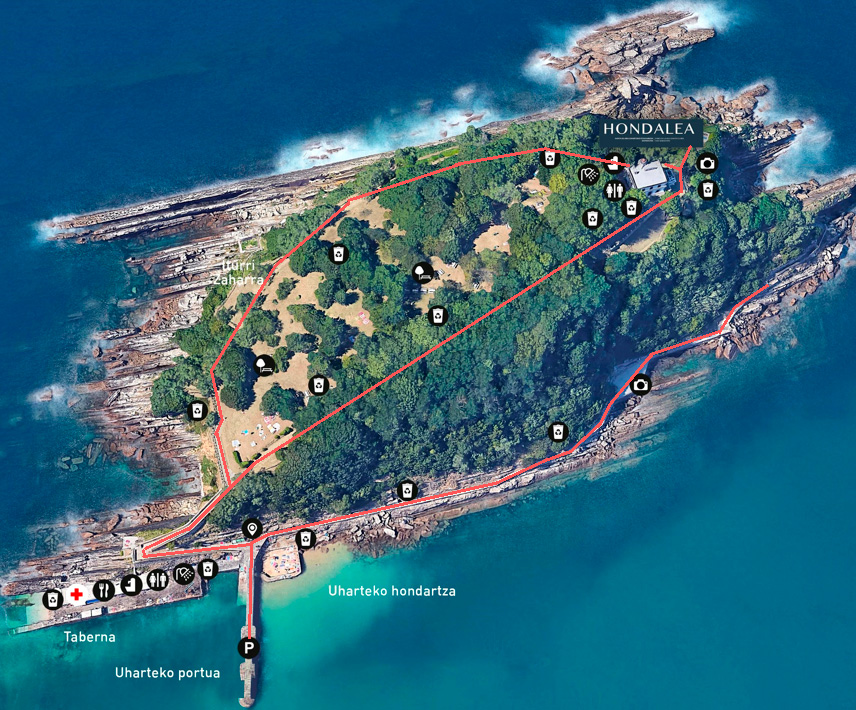
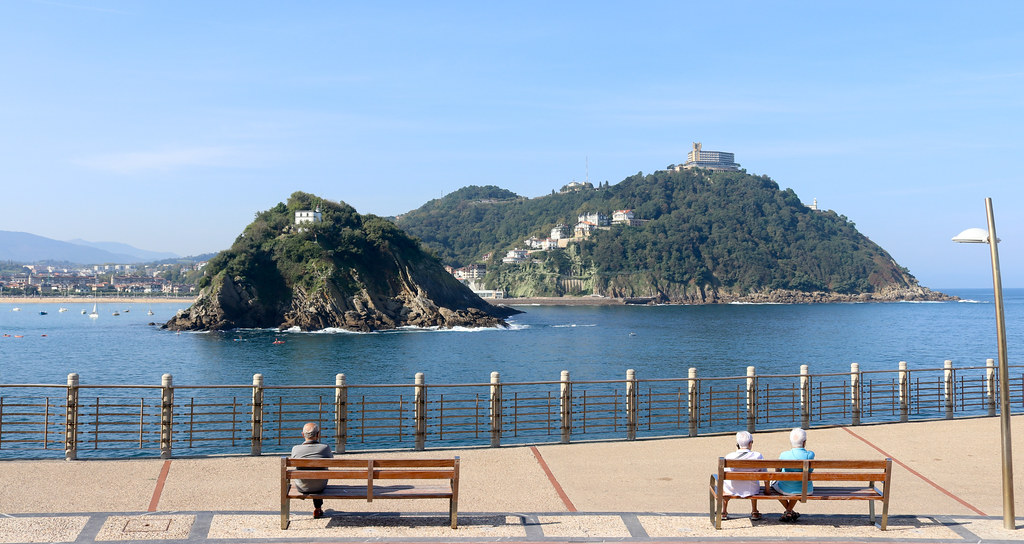
The island of Santa Clara is situated in the middle of the famous La Concha Bay. For most of the year, nobody goes there because there is only a regular motorboat service during the summer months. The other way to get there is by swimming, kayaking or similar means from the city’s beaches; the most common route is from Ondarreta. In fact, it is forbidden to camp or stay overnight on the island; visits are only permitted during the day. Since 1968, it has served as a complementary leisure facility to the city’s beaches, thanks to the Friends of Santa Clara Island Association. People use it to enjoy themselves on the small beach at the lower end or to spend a sunny day under the shade of the large trees found there.
Officially, the island has no official streets, but we could say that there are two different paths leading up to the top, where the lighthouse stands. The lighthouse was built in 1864 to guide ships as they navigated their way into the port of Donostia. Until 1968, the lighthouse was manned by various lighthouse keepers; it was abandoned that year because it had been automated a few years earlier. Before that, it is known that there were various chapels on the island which were used for different purposes; for example, in the 16th century, they served as a refuge for plague victims.
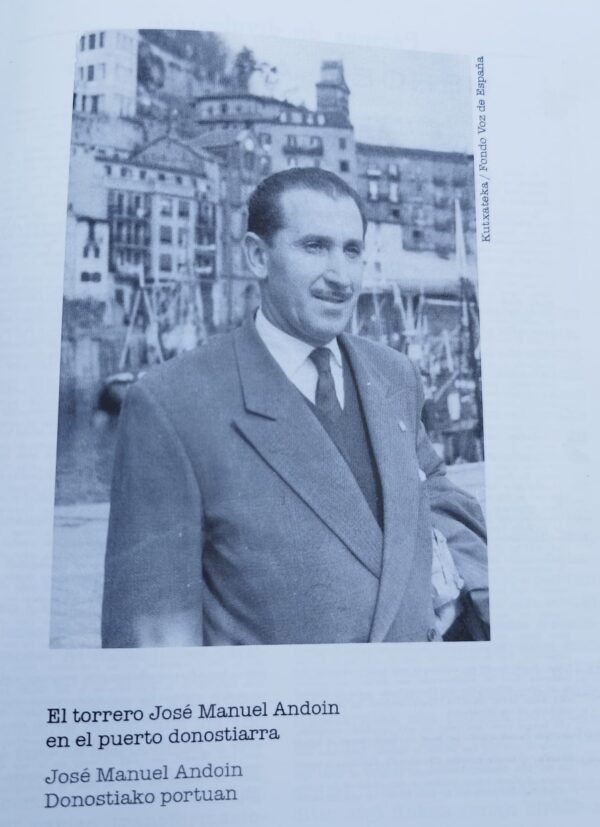
The best-known lighthouse keeper was José Manuel Andoin, in fact, the last one to hold the post. He was in charge for 20 years, and the people of San Sebastián still remember him as a pleasant and cultured man. As well as looking after the lighthouse, he was also an expert Olympic marksman, which led him to be crowned Spanish champion on several occasions. He lived on the island with his mother, who was not particularly pleasant, but rather very controlling and bossy. Both died shortly after leaving the island’s lighthouse to move to the one at Igueldo, as they were unable to settle in there.
When Andoin and her mother left the lighthouse, the house attached to it fell into disuse. It was quite a few years later that the San Sebastián-based artist Cristina Iglesias came up with the idea of creating a work of art on the site. This project came about following the artist’s receipt of the Tambor de Oro award in 2016. The mayor at the time offered her the opportunity to install one of her works in the city. Since then, a sculpture has stood at the lighthouse, which can be visited free of charge at certain times of the year.
What to see at the lighthouse and on the island
The island of Santa Clara is a small area that offers visitors the chance to enjoy the natural surroundings and take a break from it all. At the bottom, you’ll find a small bar that’s open during the summer season. There’s also a beach that’s visible at low tide; at high tide, it disappears. There are two paths leading up to the top: one is more natural and the other is paved. Once you reach the top, you’ll see the lighthouse and can find out what’s currently inside it. If you decide to wander around the island, you’ll come across a few picnic spots where you can sit down, or simply enjoy the wooded surroundings.
Hondalea
Since 2021, Cristina Iglesias’s artwork ‘Hondalea’ has been on display inside the lighthouse. The word derives from an obsolete Basque term meaning ‘abyss in the sea’ or ‘the seabed’. The sculpture contributes to her advocacy for environmental causes and the regeneration of abandoned sites. Iglesias aims for visitors to have a unique experience when viewing it and for it to spark debate, in order to raise awareness of the need to protect the environment around us – in this case, above all, the sea.
Together with the other works situated at the foot of the city’s hills, they form a triangle of contemporary art in the Bay of San Sebastián: Eduardo Chillida’s Peine del Viento XV at the foot of Mount Igueldo and Jorge Oteiza’s Construcción Vacía at the foot of Mount Urgull. All of them were created in the 20th century.
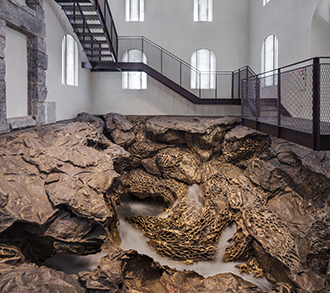
The artwork is supported by a 15-tonne bronze vessel and comprises 54 pieces. It was constructed at the Alfa Arte workshop in Eibar and transported in sections to Donostia by helicopter. To facilitate this, a temporary helipad was set up on the Paseo Nuevo. It consists of a freshwater circuit fed from an underground reservoir, with water pumped into the sculpture every 20 minutes to create a sequence that simulates the swell of the waves and the effect of the tide.
Viewpoints
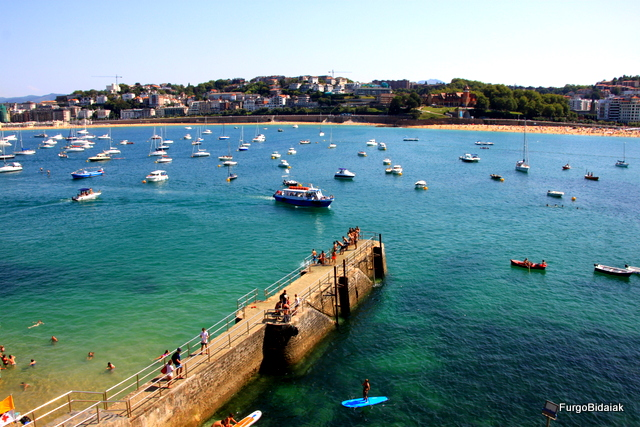
You’ll come across the first viewpoint as soon as you arrive on the island. It’s well worth spending a little time on the jetty where the island’s motorboat docks to take in the view from there. In front of you, you’ll see the vast La Concha Bay with its beautiful beaches of La Concha and Ondarreta. Behind them lie the first houses on the beach and, in the middle, the Miramar Palace, the summer residence of Queen María Cristina of Habsburg-Lorraine.
If you walk up the first slope on the street called ‘Calle Luis Mari Iturri’, before tackling the second one, you’ll be treated to a beautiful view of Ondarreta Beach and the Antiguo neighbourhood – a view that’s harder to spot if you’re on the opposite side of the bay. You’ll also see Mount Igueldo and the Arribizketa area (better known as the Tennis Club) with the famous Peine del Viento XV sculpture, erected there in 1977. Even if you have good eyesight, you’ll be able to make out the route taken by the funicular railway up to the top of the mountain.
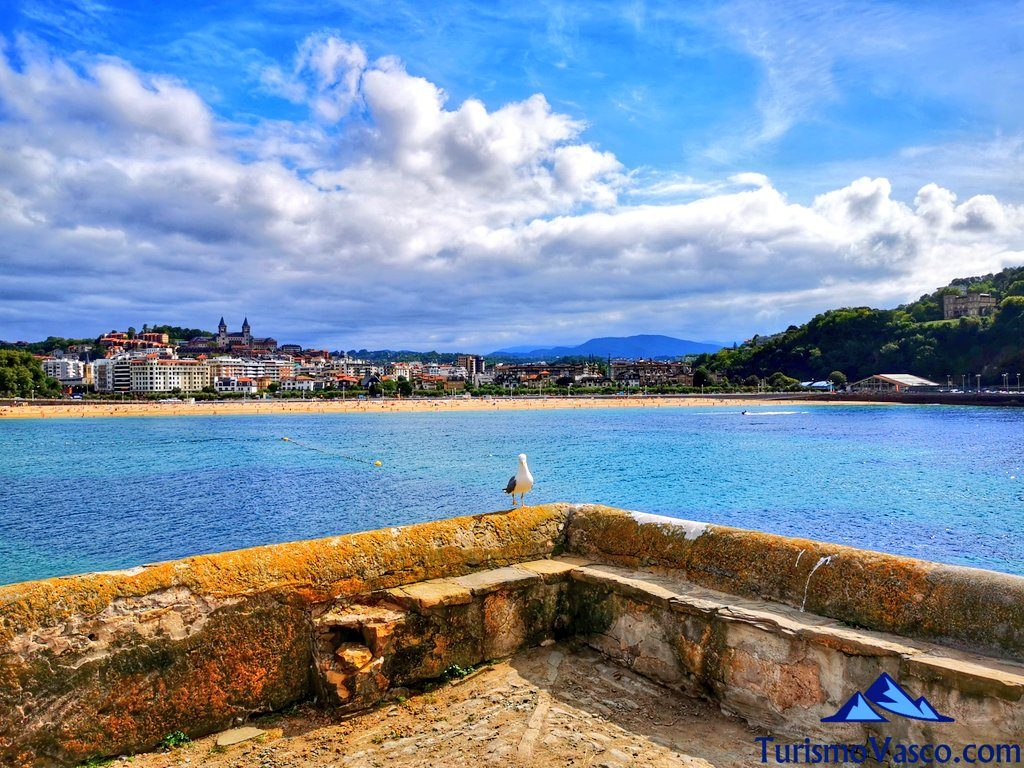
The final viewpoint along this path is at the end of the second slope. From there, you’ll see views similar to those you’ve encountered so far, but you’ll have the peace of mind of being in a more spacious spot that’s perfect for taking a photo. Don’t forget to look down and admire the rock formations created by the sea’s erosion on the island.
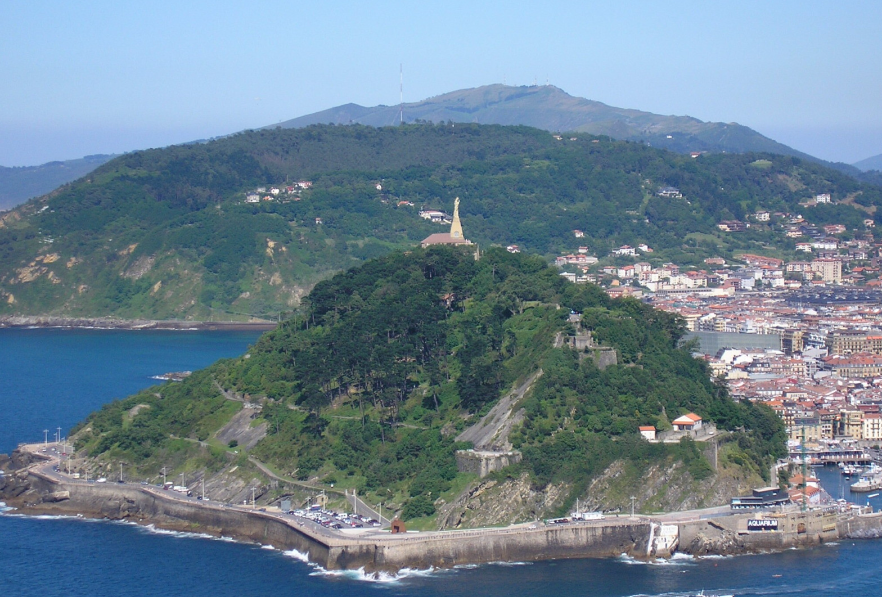
To see Mount Urgull from the island, you’ll need to make your way to the lighthouse. On one side of it, you’ll find a small viewing point looking out towards the mountain. From there, you can see La Mota Castle, which was rebuilt in the 17th century, and the Sagrado Corazón de Jesús, which was added in the mid-20th century. You can also see, at its foot, the Paseo Nuevo with the sculpture Construcción Vacía, which was installed there in 2002.
If you’re into exploring and you take the nature trail, the landscape you’ll encounter will be at its wildest. The rear of the island is an ideal spot for observing the formations created by the force and erosion of the sea. Here we find the famous flysch formations, which can also be seen in the Basque Coast Geopark. Flysch are formations made up of layers of hard rock (limestone, slate or sandstone) interspersed with softer layers (marl or shale).
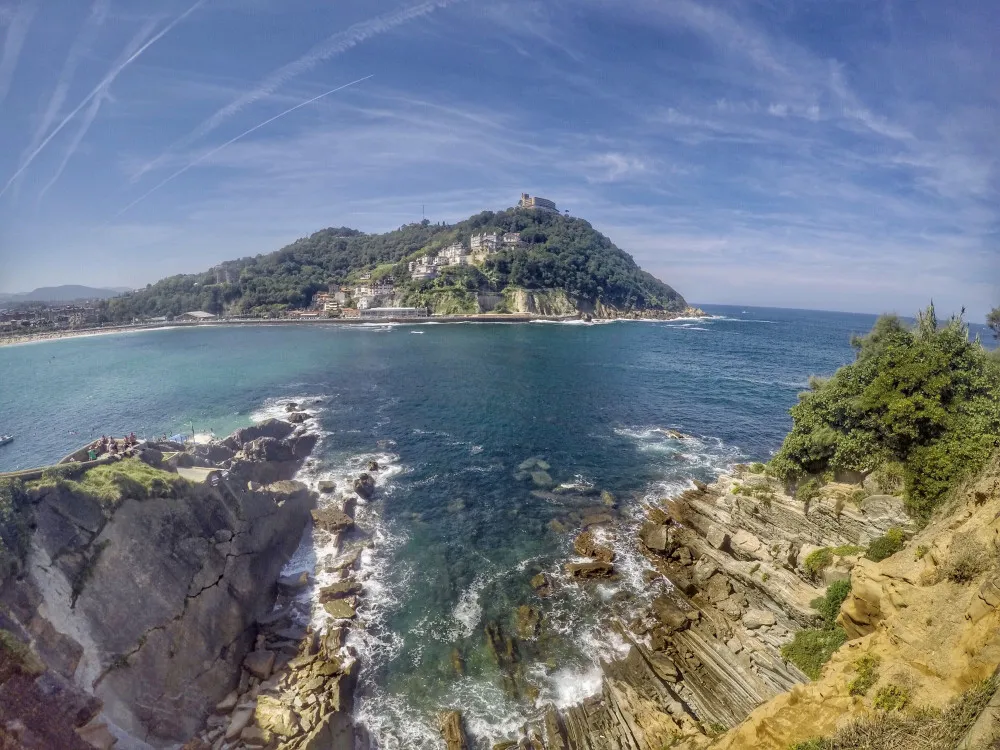
As a bonus, we at Bike Rental would like to recommend walking or cycling along the Paseo Nuevo to enjoy one of the best views of Santa Clara Island, from where you can also see the back of the island and the vast expanse of the sea. You’ll also see the island’s lighthouse and, in the distance, on the right-hand side of Mount Igueldo, the lighthouse situated there.

Hello! My name is Hegoi, a name that has its roots in Basque mythology, and since I was a child I have been fascinated by Basque culture and above all by talking about it with anyone who wants to know about it, so when I could, I studied tourism and nowadays I work as a guide at Bike Rental San Sebastian.