The Gran Casino of San Sebastian: history, architecture and cultural life
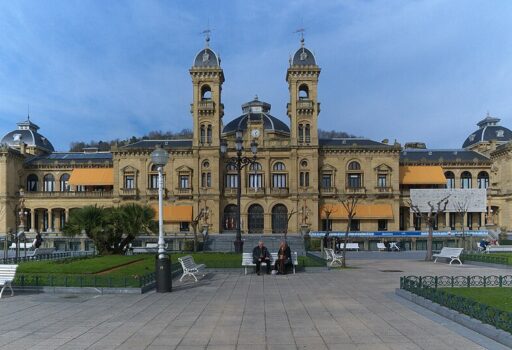
History of the Gran Casino The history of the Gran Casino in San Sebastian begins some time before its construction in 1882. At that time, Donostia was a summer resort, where tourists from Spain and across Europe came to spend time enjoying a mild and pleasant climate, far from the hustle and bustle of large […]
Categories
History of the Gran Casino
The history of the Gran Casino in San Sebastian begins some time before its construction in 1882. At that time, Donostia was a summer resort, where tourists from Spain and across Europe came to spend time enjoying a mild and pleasant climate, far from the hustle and bustle of large cities such as Madrid. San Sebastian is a welcoming, relaxed place with a laid-back atmosphere, which also attracted royalty, first Queen Isabella II and later Queen María Cristina and Queen Victoria Eugenia.
The city offered its visitors sea bathing to improve their health, but also a variety of entertainment such as dances, theatre performances, sporting competitions and, of course, gambling. Gambling is in fact banned in Spain, but the authorities turn a blind eye to it as it brings in a great deal of money to the cities where casinos are established. San Sebastian could not be left behind, and so a board of shareholders decided to create the Gran Casino de San Sebastian.
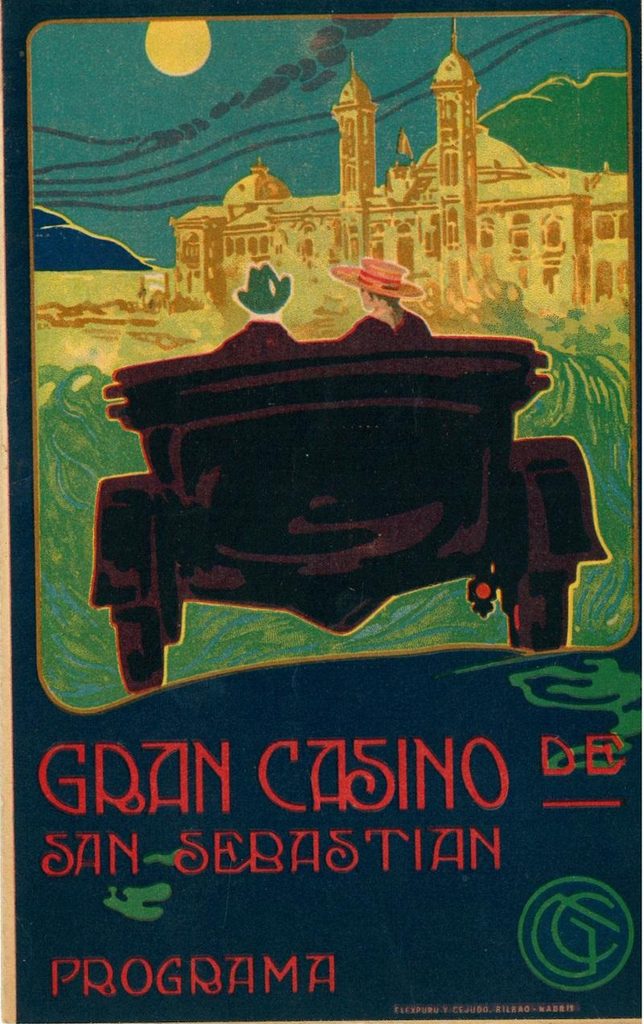
Making use of a vacant plot next to La Concha beach—created when the city walls were demolished a couple of decades earlier—these shareholders promoted the creation of the casino, which would not only house gaming rooms but also a ballroom, a restaurant, a spa and the headquarters of the Círculo Easonense, a gentlemen’s club, many of whose members were shareholders in the casino, amongst other facilities.
Thus, on 1 July 1887, this multi-purpose building was inaugurated in the presence of Queen Regent María Cristina, who had been spending the summer in San Sebastian for just a few weeks and who would soon become a key figure in the city’s development as a tourist destination.
Architecture and design of the building
The building’s architects were Luis Aladrén and Alfonso Morales de los Ríos, who drew inspiration from the Monte Carlo Casino and the Baths of Caracalla for their design, thus creating a building in a historicist and eclectic style for which they used local sandstone. For the stained-glass windows, they commissioned the Maumejean firm, who also produced the stained-glass windows for numerous other buildings in San Sebastian.
The building is divided into two wings and a central axis, which forms the main entrance to the casino. Visitors could enter via the rear, where the carriage entrance was located, or via the front, where the enormous terrace overlooking the Alderdi Eder gardens is situated. The Círculo Easonense had its own entrance on the Boulevard.
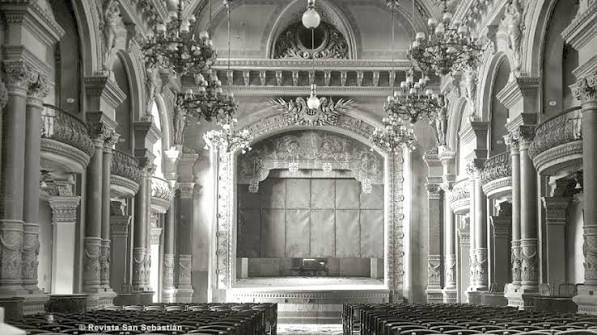
Once inside, visitors to the casino could admire the enormous monumental staircase leading to the ballroom and the gaming rooms, the latter being reserved exclusively for foreigners. On the ground floor were the restaurant and the more innocuous games, where even women were permitted to gamble. The spa was located in the basement. Opposite the terrace, a bandstand hosted concerts every afternoon.
Cultural events and activities
Although the building hosted countless cultural and social activities such as dances and concerts when it was a casino, it is still just as vibrant today; indeed, the ballroom – now the plenary hall – continues to be used to promote almost all the cultural events taking place in the city, such as the Tamborrada or Semana Grande. This is also where the Tambor de Oro award is presented on 20 January, and where piano concerts are held during the Jazzaldi festival.
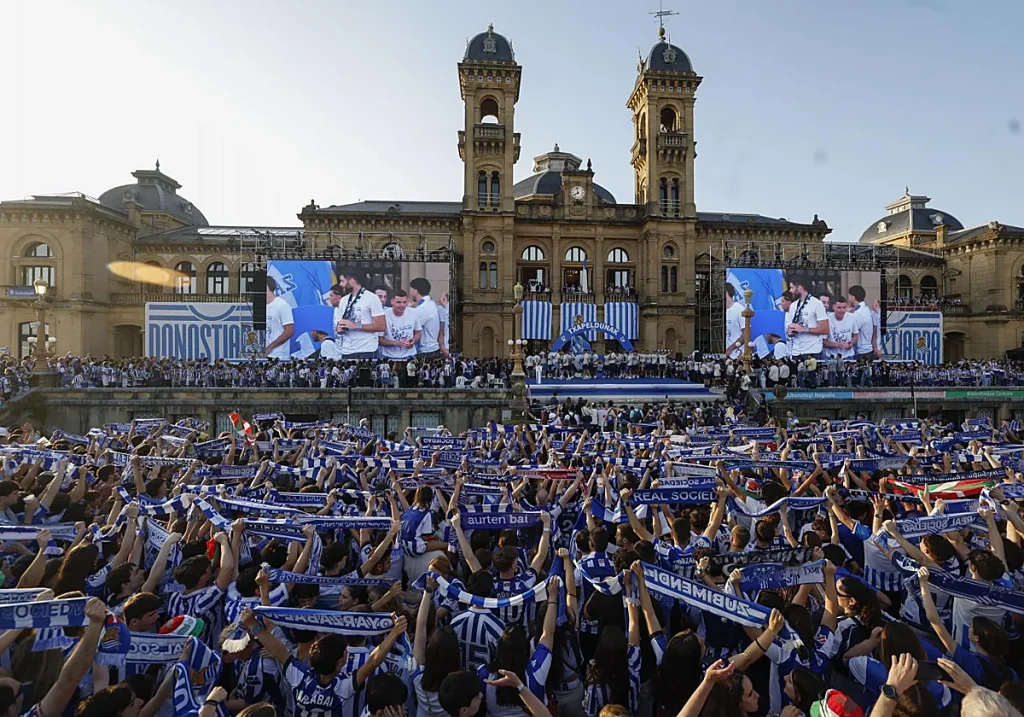
The terrace also serves as a venue for celebrations, such as the weddings held one Saturday a month, the Tamborrada Infantil, or, more recently, the celebration of Real Sociedad’s victory in the Copa del Rey. And whilst the bandstand no longer stands on the terrace, it is not uncommon to see craft fairs, sporting events, temporary exhibitions and visitors of all nationalities enjoying the building and the spectacular views it offers of La Concha beach.
How to visit and what to expect
Today, and since 1947, the Gran Casino de San Sebastian has served as Donostia Town Hall, which means it is usually closed to the public, as the former gaming rooms now house offices. However, it does occasionally open its doors to the public, whether for the launch of an event, concerts or weddings.
It also usually opens for a couple of weekends a year, around Easter, so that ordinary residents of San Sebastian can also enjoy this magnificent building that belongs to us all. On these occasions, free guided tours of the building are usually organised for anyone wishing to learn more about its history and architecture. You’ll need to keep an eye out for these, as places tend to fill up quickly.
Interesting facts and anecdotes
When it was still a casino, to prevent the people of San Sebastian from entering the gaming rooms, there was a bouncer at the entrance to the rooms known as ‘El Belga’, as he was a man from the Belgian Congo who, according to the story, was very tall and imposing, but also had scars on his face that gave him a fearsome appearance.
It is known that one of the last places where the spy Mata Hari worked was San Sebastian, so we can say with almost complete certainty that she once set foot in the halls of this building. It is said that Donostia was a hotbed of spies during the First World War, as we are very close to the French border – close enough for news from the front to reach us quickly, yet far enough away for the war not to reach us here. Thus, it is known that many European intellectuals and artists who usually resided in Paris spent periods here, such as Trotsky and Picasso.
During the Spanish Civil War, the building was seized by the rebels, who barricaded themselves inside until the Republicans drove them out shortly afterwards; this is why the façade facing the boulevard bears countless bullet holes, bearing witness to the gunfights.

My name is Alba, and although my first name doesn’t sound very Basque, my unpronounceable surname proves otherwise. I’ve lived in Donostia all my life. I’m an art historian and have been a tour guide for many years; I love travelling, languages and, of course, art.