Constitution Square
Although it does not have the name of many other similar squares in Spain, San Sebastian’s Plaza de la Constitución (Constitution Square) is the city’s ‘main’ square. It is the epicentre of our most important festivals and one of the main meeting points for the people of San Sebastian. Festivals, concerts and fairs take place […]
Categories
Although it does not have the name of many other similar squares in Spain, San Sebastian’s Plaza de la Constitución (Constitution Square) is the city’s ‘main’ square. It is the epicentre of our most important festivals and one of the main meeting points for the people of San Sebastian. Festivals, concerts and fairs take place here, but it is also an unrivalled place to have a drink at one of its many terraces. La Consti, as it is affectionately known, is the heart of Donosti, which is why we are dedicating the following post to it.
The square over the years
Plaza de la Constitución is relatively new, as it did not exist until the 18th century. In its place there were buildings, which were demolished to open up this space and give the people of San Sebastian a little air and light, as the Old Town was a neighbourhood of narrow, dark streets that could be stifling. The only square in the city was just a slightly larger space next to the city walls, so this new square was more than welcome in a San Sebastian surrounded by walls.
To differentiate it from the existing square, the new one was creatively named ‘Plaza Nueva’ or ‘Plaza Berria’ in Basque, like other similar squares, such as those in Bilbao or Vitoria, to which it is very similar, although ours is smaller.
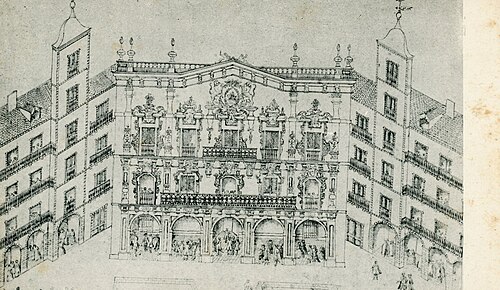
However, the square was not exactly as it is today. Designed in 1723, it was Baroque in style, so it had a little more decoration than it does today. In fact, the town hall was profusely ornamented in the Baroque style. All that remains of this building are engravings from the period, because, obviously, everything was destroyed in the fire of 31 August 1813.
As you will know if you are familiar with the history of Donostia, the entire city was set on fire by the Anglo-Portuguese troops who besieged the city in 1813 during the War of Independence. Practically all the houses burned down, except those located on the street now called 31 of August. The new square was no exception, so everything we see today was rebuilt in the 19th century, barely a century after its initial construction.
When it was rebuilt, the style in vogue was Neoclassical, a much more sober style than Baroque, as can be seen in the square today. However, the arches were retained, unlike the towers that stood at the corners, and the town hall was rebuilt in the new style, of course. This new ‘Plaza Nueva’ was named ‘Plaza de la Constitución’ in honour of the 1812 constitution, better known as ‘La Pepa’.
This name did not last long, because at the end of the century it was renamed ‘Plaza Berria’, and then ‘Plaza del 18 de Julio’ during Franco’s dictatorship. With the return of democracy, the name ‘Plaza de la Constitución’ was restored, and the people of San Sebastian had already gotten into the habit of calling it ‘La Consti’.
During Franco’s dictatorship, the municipal government was also moved to the former Gran Casino next to La Concha, leaving the current building for different uses, now serving as offices and a public library.
Uses of the square
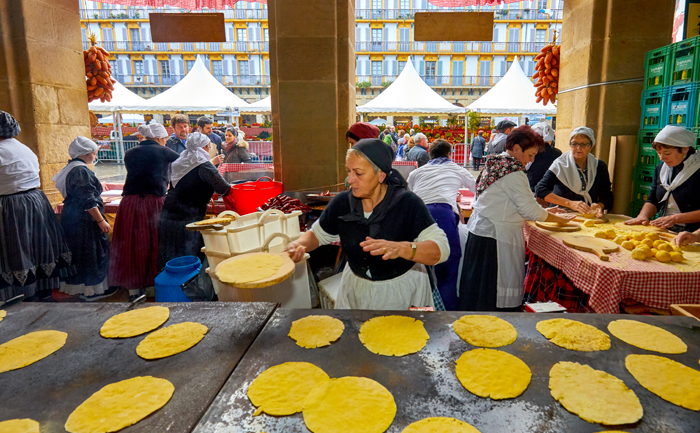
As a proper ‘main square’, La Consti used to be the market square. When the weather was good, the stalls were set up in the centre, and when it was bad, they were placed under the arches. This was the case until the La Bretxa market buildings were constructed. Today, the only market held here is the Saint Thomas Fair on 21 December, one of the most important events of the year.
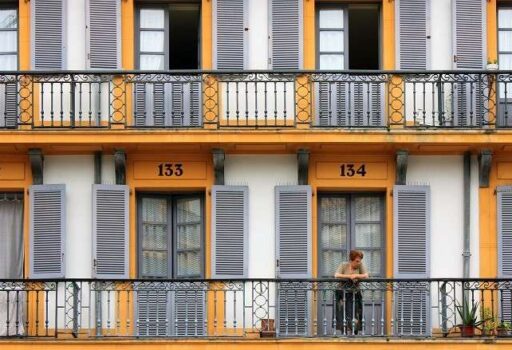
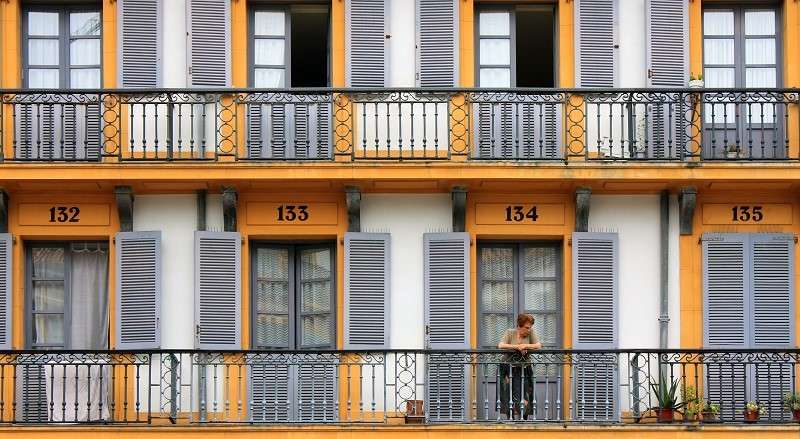
If you have been to the square, you will have noticed that each balcony has a number, with a total of 147. These numbers were used to identify the balconies, which were used as boxes during bullfighting festivals, meaning that La Consti was our bullring on special occasions. It has been a long time since any bulls passed through here, more than 100 years, but we keep the numbers in memory of that time.
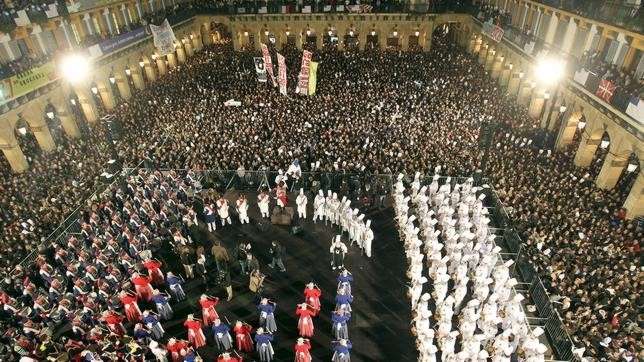
Even so, the main use of this square is during the day of Saint Sebastian, 20 January, better known as Tamborrada. This is where the 24-hour festival begins and ends, with the flag being raised at midnight on the 19th and lowered 24 hours later, at which point we sing the city’s anthem, the March of San Sebastian, and the best day of the year begins. Although it may not seem like it, this square can hold thousands of San Sebastian locals singing and dancing in unison, and it is undoubtedly one of the experiences to be had if you are visiting Donostia on that day. At least if you like crowds.

Hello! My name is Hegoi, a name that has its roots in Basque mythology, and since I was a child I have been fascinated by Basque culture and above all by talking about it with anyone who wants to know about it, so when I could, I studied tourism and nowadays I work as a guide at Bike Rental San Sebastian.